


NEW TRIP
The mist-shrouded trails of the Kumano Kodo, the holy ground of Japan, have been shared by people from every walk of life, from commoners to emperors, for more than 1,000 years. Our hikes in this sacred landscape bring a discovery of Japan’s rich spirituality and lush rural landscapes as we explore the classic Nakahechi Route, then head to the less-traveled Iseji Route for hikes across the mountains and coasts of the Kii Peninsula. We wrap up our pilgrimage adventure in unforgettable Kyoto, with visits to local artisans and I. M. Pei’s masterpiece, Miho Museum. Onsen baths, culinary treats, and Japan’s traditional hospitality add to our delights along the way.


Arrive: Osaka
Depart: Osaka


The shrines, waterfalls, and deep forests on the Nakahechi Route of the Kumano Kodo create the perfect walking environment. The famous Nakahechi trails were used by nobles from the 10th century onwards, giving this section its name, “the Imperial Route.” We’ll explore the best and most scenic trails of this popular route, with overnights in hotels and ryokans. On Day 5, we take the traditional pilgrimage ride down the gentle Kumano River by flat-bottomed boat to reach the coast of the Kii Peninsula.
On the Iseji Route, we cross the rugged mountains and coasts of the Kii Peninsula. This section of the Kumano Kodo is off the beaten path and winds deep into Japanese backcountry, offering fascinating shrines that show the fusion of the Buddhist and Shinto faiths. On Day 9, we arrive on the coast at Ise to visit the Grand Shrines of Ise, the holiest place in the Shinto religion.
We’ll experience this beloved thousand-year-old city through its renowned artisans, temples, and imperial gardens, plus a visit to the atmospheric Fushimi Inari shrine, with its 5,000 torii gates. Depart via Osaka on Day 14.
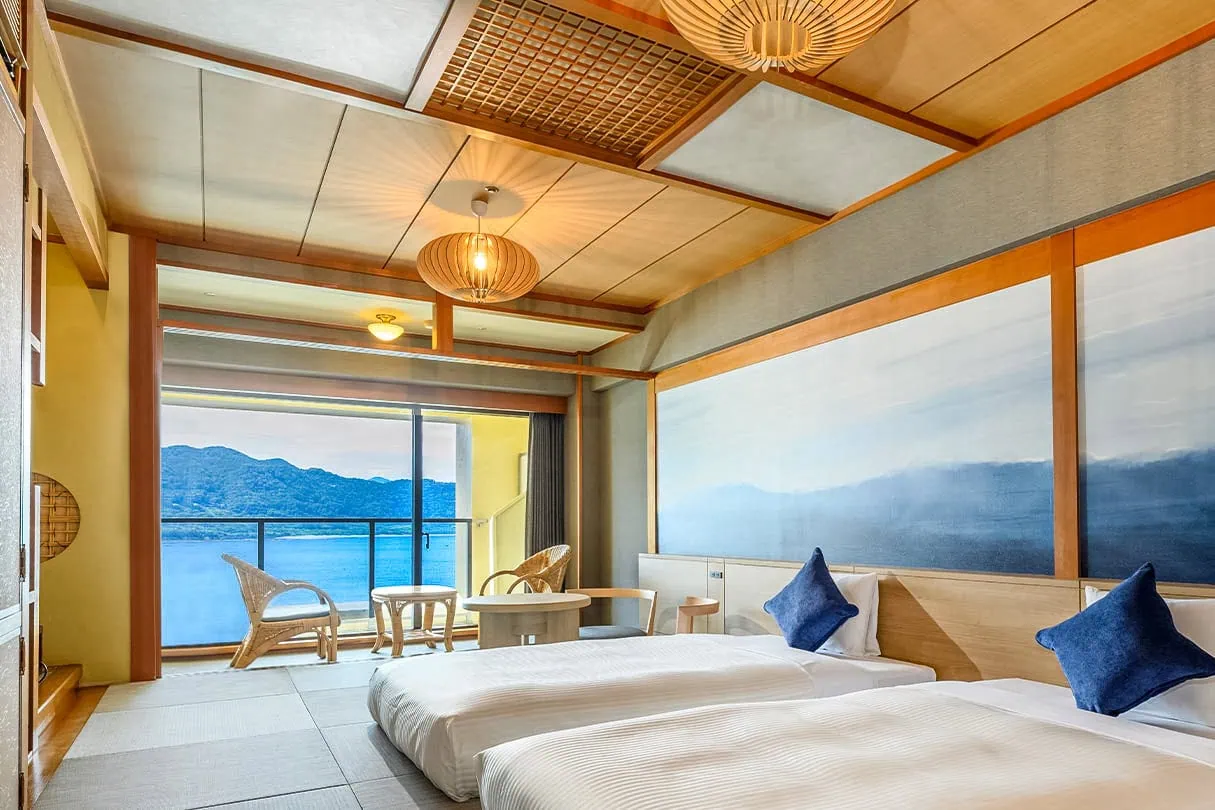
Scroll through our signature accommodations for this trip below. Although it is highly unlikely, we may make substitutions when necessary.




This trip is rated a Level 3+, Moderate to Strenuous. For the most part, the trails are well worn and not overly rugged or difficult, but the approaches and descents can be steep, and the trail conditions rocky or muddy. Please note that your Trip Leader may make adjustments to the hiking routes, depending on local weather and trail conditions. The hikes will be best enjoyed by hikers who are sure-footed and have good balance. We recommend you make a special effort to get in good physical condition for this trip.
Average Hiking Day
Challenge Day
Some of the paths of the Kumano Kodo have long sections with steep inclines and declines, mossy stone staircases, or trails with exposed tree roots. Please note that in Japan, it can rain any time of the year and the trails can get slippery and muddy.
We strongly urge you to train for your trip, as your enjoyment will be highly dependent on your level of fitness. The best training for a hike is to hike, especially over hills or rough terrain. Next best are running, swimming, bicycling, or other cardiovascular exercises. Stair-climbing machines are excellent preparation for hiking uphill. Your feet should also be well prepared—make sure your hiking boots are sturdy, comfortable, and thoroughly broken in. Altitude is generally not a problem on this trip. However, some people still experience a few problems when they first reach high altitude. Slight headache and sleeplessness are the most common symptoms.
Japan’s climate and temperature range are similar to the east coast of the US, with four distinct seasons. In March and April, the weather typically begins feeling like spring and we hope to enjoy the cherry blossoms. Viewing the blossoms is somewhat of a national pastime in Japan. However, as spring is a transitional season, we can expect some rain. In autumn, the weather in Japan turns pleasant, as the humidity of the summer months leaves the air. Because the occasional typhoon does occur in the autumn, we may expect some rain. Temperatures should range from the 50s to the 70s °F. In the mountains, the weather is unpredictable and we may encounter rain.
Japan is a blend of the traditional and modern, and our trip encompasses this unique mixture. We will stay at traditional ryokans as well as Japanese-style hotels. The quiet world of the ryokan is a venerable cultural institution—a way to experience a simple, timeless way of life. The hosts at our ryokans consider us as family and treat us accordingly. After being warmly welcomed, we trade our street shoes for slippers. Once inside, we remove our slippers as we step onto the finely woven tatami mats covering our sleeping room floors. Our rooms are spacious and pleasant with low tables and comfortable futon mattresses with quilts and blankets. Ryokans have double rooms (singles are sometimes possible). Please note that single guests may share accommodations with another guest in the group of the same gender.
Some of our ryokans have rooms with attached toilets, while others will have “down the hall” toilet facilities that are shared by all guests. In addition, some may have private Western-style showers or tubs in the rooms, while others may not. All of the ryokans have a communal ofuro (a Japanese-style bath). An ofuro is an integral part of the traditional Japanese bathing ritual, emphasizing cleansing and relaxation. Normally, a fresh cotton yukata (robe) is provided for each guest at the ryokans. These light kimonos can be worn anywhere in and around the ryokan, including the ofuro, and we often wear them to meals (make sure to wear the left side over the right). For many of our breakfasts and dinners, beautifully presented meals are served as we sit on the floor at low tables on our tatami mats.
A highlight of any visit to Japan is its superb cuisine defined by fresh ingredients and artful presentation. We will have ample opportunity to sample both familiar and new dishes. We will sample many types of Japanese food, and usually the first “bite” is with our eyes, the presentation being a tantalizing array of fresh fish, beef, vegetables, tofu, miso soup and, of course, rice, all served on individual plates and bowls of exquisite sizes, patterns, and proportions. We eat with chopsticks and are usually seated at low tables on the floor. At some ryokans, you may choose between a Japanese breakfast of fish, rice, miso soup, tofu, vegetables, pickled condiments, and tea, or a western breakfast consisting of eggs, toast, salad, and coffee. Many places, however, offer only Japanese food.
During the trip, you will have some lunches and dinners on your own, allowing you ample opportunity to sample the endless variety of Japanese food. When we are traveling, we may try an obento (box lunch), and we sample the snack foods of Japan and/or get a bowl of udon, ramen, or soba noodles at one of the local spots. We often eat lunch at noodle shops and small neighborhood lunch spots, avoiding the infamous high-priced meals of Japan. Keep in mind that Japanese food is very different from what we are used to, and with the limited availability of American foods, your food intake will be a big part of the Japanese adventure. Please note that vegetarian options are available but limited. Strict vegetarian diets, vegan diets, or gluten-reduced diets will be difficult to accommodate due to the pervasiveness of the fish-based stock dashi and the use of soy sauce and miso in Japanese cuisine. Gluten-free cuisine will not be available.
In Japan, bathing is a time-honored tradition, a relaxing daily event. While staying in our ryokans, we will bathe as the Japanese do—using the ofuro system. In separate men’s and women’s sides, the custom is to wash and rinse before entering the ofuro, a large tub of hot water where we can sit back with legs extended, submerged to the neck (this trip is not for the very modest!). Early Shinto was a religion of cleanliness and purification. Ritualistic bathing began during this time and has been perfected over the centuries. Either as a divine imperative or a luxury, bathing in Japan has always been regarded as more than a hygienic chore. The ofuro is the perfect way to finish a hectic day of travel. After a relaxing bath, we gather for the evening meal.
"Outstanding trip! Diverse itinerary, great introduction to Japanese artisans, very, very good look at the shrines, hiking trails, and seafaring traditions of this fascinating part of Japan."
Greg P.
San Antonio, TX
"The hikes gave me a much better understanding of the country as a whole and the historical influence that the gorgeous landscape had on the culture and the people. Thanks for offering a balanced picture of a complex and intriguing place."
Jo V.
San Carlos,California
The best times to hike the Kumano Kodo are spring (March to May) and autumn (October to November). These seasons offer mild weather, clear skies, and vibrant natural scenery, including cherry blossoms in spring and colorful foliage in fall. Summer can be humid and rainy, while winter is cooler and less crowded, with occasional snowfall in the mountains.
The Kumano Kodo is a UNESCO World Heritage pilgrimage route that has been walked for over 1,000 years. It connects sacred sites in the Kii Mountains, including Kumano Hongu Taisha, and has deep ties to Shinto and Buddhist spiritual traditions. The trail was historically used by emperors, monks, and commoners seeking spiritual renewal in nature.
The Kumano Kodo is typically considered a moderate hiking trail, with hikes ranging from 3 to 7 hours over mountain trails, forest paths, and stone staircases. Some days involve significant elevation changes, but our well-paced itinerary ensures you have time for rest stops, cultural experiences, and overnights in traditional ryokans and onsens, blending physical activity with relaxation.
The Kumano Kodo network includes several historic pilgrimage routes through Japan’s Kii Mountains. The main routes are:
Our itinerary combines highlights from both the Nakahechi and Iseji Routes, offering a rare opportunity to hike iconic sections of each. This thoughtful combination allows travelers to explore a diverse range of ecosystems—from lush forested mountains to scenic coastal paths—while visiting sacred pilgrimage sites and avoiding the more crowded stretches of the trail. The journey strikes a perfect balance between spiritual heritage and natural beauty, with overnights in traditional ryokans and onsens as well as stylish modern hotels.
Pack lightweight hiking gear, including sturdy shoes with good traction, breathable layers, rain gear, a daypack, and slippers for indoor areas. The trail can be slippery, especially in damp conditions. We provide a full packing list and luggage transfers so you can hike with ease and comfort.

Small Group Adventure
Hiker’s Journey to Bhutan
Bhutan
Level 3+
12 Days
From $7,695

Small Group Adventure
Japan: Snow Monkeys and Winter Cranes
Japan
Level 2
10 Days
Call for Pricing

Small Group Adventure
Japan: Temples, Treasures & Teahouses
Japan
Level 2
14 Days
From $11,495

Small Group Adventure
Mongolia’s Golden Eagle Festival
Mongolia
Level 3
12 Days
From $9,495
Our Area Specialists know every detail about our tours. They will be happy to answer any questions and help you choose the journey that’s right for you. Contact us to learn more or book your trip today!
Submit the form below to download itinerary
With more than 200 different adventures to choose from, we want to help you find the trip that’s right for you. Our Trip Level system ranks each trip in two ways: a number rating from 1 to 6 according to the activity, and general travel rigors. 1 is the easiest and 6+ the most difficult.

