


NEW TRIP
Please note
Comprehensive travel insurance for emergency medical evacuation is required for this cruise.
Choose from a Variety of Ships
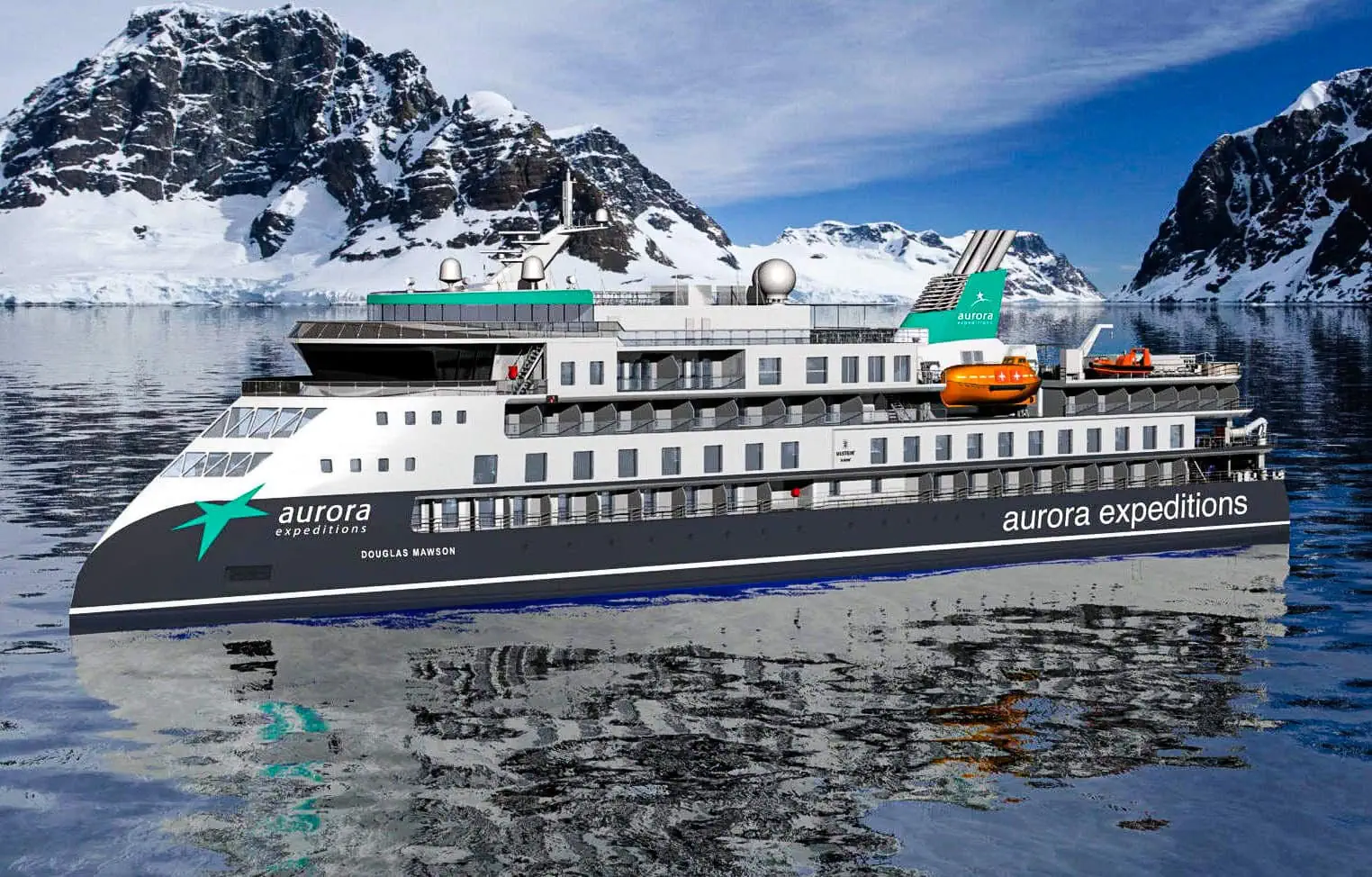
We offer several exciting voyages to Antarctica aboard a variety of ships. This is the general information for Epic Antarctica: Crossing the 7th Continent. Please contact our Polar Specialists for details about each departure, itinerary, and ship.
Booking Discount
Availablity is limited, please call for details


Arrive: Dunedin, New Zealand
Depart: Ushiaia, Argentina
Note: This trip is not exclusive to, nor operated by, Wilderness Travel, who acts solely as an agent in booking your reservation with the operator. Please download the Rate Sheet in the Dates & Pricing section to see the full pricing details and contact our Cruise Collection Specialists to check availability.
Arrive in Dunedin, where you will be met and transferred to your assigned pre-voyage hotel. If you are already in Dunedin, please make your way to your hotel. Enjoy your evening in New Zealand’s southernmost city. You may like to indulge in a meal at one of Dunedin’s fine restaurants, or perhaps enjoy a leisurely stroll along the picturesque Otago harbor. Overnight at Scenic Hotel Dunedin City.
After breakfast and checkout of the hotel, the morning is at leisure to explore Dunedin. Later, settle into your cabin. As the ship sets sail, join your expedition team on deck before tucking into a delicious dinner, and toast to the voyage ahead.
Sea days are a wonderful opportunity to relax, meet your fellow travelers and learn about the history, environment and local wildlife in this fascinating corner of the globe. Your expedition team is available to answer any questions you may have and offer pro-tips on photography and birdwatching. With decades of collective experience in the region, they love to share their expertise and enthusiasm with fellow travelers. Join them in the lecture room for entertaining talks and presentations to enrich your understanding of the wildlife, landscapes, and historic sites you are about to encounter.
First visited by Maori navigators centuries ago, these islands are of great significance to Ngai Tahu, the indigenous peoples of New Zealand’s South Island. Their natural beauty and astonishing biodiversity have now been recognized globally, but few have had the privilege to visit these far-flung shores, which are now yours to explore. Day 7 is at sea.
Macquarie Island (known affectionately as Macca) rises steeply from the Southern Ocean in a series of emerald summits: a beautifully fierce, elemental landscape teeming with life. Keep your binoculars handy because this subantarctic refuge is home to 3.5 million breeding seabirds, including no less than four species of penguin! Alongside boisterous colonies of tuxedoed kings, charming gentoos, robust rockhoppers, and endemic royal penguins, you’ll find three types of fur seals and a large proportion of the world’s elephant seals. Layer up and head out on deck to experience the sound, sight (and smell!) as you approach one of the largest concentrations of life in the Southern Ocean.
Remember to keep an eye out for Macca’s kelp forests—these remarkable underwater ecosystems are quite mesmerising as their fronds sway back and forth on the water’s surface.
In addition to being a globally recognised and protected wildlife refuge, Macquarie Island played an important role in Antarctic history. It was here, in 1911, that five men disembarked Mawson’s Aurora and established a radio relay station which would transmit the first communication from Antarctica to the outside world.
As Macquarie Island slips over the horizon, keep watch for wandering, grey-headed, black-browed, and light-mantled albatross, which may follow the ship to bid you farewell as you continue south. Close observers may notice a subtle change in the character of the sea as you cross the Antarctic Convergence. Beyond this belt where the waters of the north and south mix, the sea surface temperature drops by about 4°C (39°F), signalling our entry into the Antarctic. This transition zone is known for its nutrient-rich waters, so keep watch for porpoising penguins, flocks of fluttering Antarctic petrels, or perhaps the more solitary snow petrel. You’re not far from the Antarctic Circle, so your first iceberg can’t be far away!
The Ross Sea region is a globally significant wildlife sanctuary. Its nutrient-rich waters support an astonishing array of uniquely adapted Antarctic species, including Ross Sea orcas, Antarctic petrels, and South Pacific Weddell seals. It is also home to Antarctica’s largest Adélie penguin colony, and many of the largest emperor penguin colonies. The unique biodiversity of the Ross Sea has been protected within the world’s largest marine protected area since 2016.
The human heritage of the Ross Sea coast is equally impressive. Since James Clark Ross discovered the region in 1841, countless expeditions have built base camps on scattered ice-free slivers of land, using them as staging posts for bold forays across the polar plateau. Many of them departed in a hurry, leaving artifacts, scientific equipment, and sometimes entire huts behind. Today these sites are preserved as open-air museums and protected under the Antarctic Treaty System.
Some places you may visit include:
Ross Ice Shelf
Find a spot on deck as we cruise perfectly cleaved ice cliffs towering some 100 feet above the crystalline waters of the Ross Sea. This is the floating edge of the largest ice shelf in Antarctica, which covers an area the size of France. Watch for elegant emperor penguins, sweet-faced Weddell seals hauled out on ice floes, and the unmistakable “pouf’ of an orca’s exhalation.
Franklin Island
This delightful ice-free outpost with a rookery of rambunctious Adélie penguins is well worth a visit. Stretch your legs as you stroll up a gentle incline past the colony to a high point, where panoramic views of the Ross archipelago and the ice shelf unfurl.
McMurdo Sound
Enter a realm of exquisite beauty, an otherworldly icescape set against a backdrop of gleaming glaciers, shimmering mountains, and the polar ice sheet itself. McMurdo Sound is the historic gateway to the South Pole and remains a busy working harbor, serving as a logistics hub for the extensive scientific operations taking place at the McMurdo and Scott Research bases on Ross Island. It is here, in this achingly barren landscape, that early explorers established their base camps and struck out for the South Pole. If conditions allow, we aim to land at one (or more) of their beautifully preserved huts, many of which still stand, to dwell for a moment among the artifacts of a distant time, and reflect on the triumphs and tragedies of those who brought them here.
Cape Washington, Terra Nova Bay
Bounded by soaring peaks and fed by immense glaciers, Terra Nova Bay supports an abundance of polar wildlife, including the rarely sighted Arnoux's beaked whale. Fast ice anchored to the bay’s northern shore in the shelter of Cape Washington is home to one of the largest known emperor penguin colonies. Some 20,000 males huddle here each winter, incubating their eggs and awaiting the sun’s return. Weather and ice permitting, visit the bustling rookery to witness the delightful emperors and their fledgling chicks.
Cape Hallett
The snow-capped Admiralty Mountains rise dramatically from the gravelly spit of Cape Hallett. This is the site of a decommissioned scientific base and an abundance of Antarctic mosses, lichens, and invertebrates protected by the Antarctic Treaty System. Amble across gently undulating terrain, taking care to give resting Weddell seals a wide berth. The Adélie penguin rookery here can host close to 50,000 breeding pairs, while snow petrels, Wilson’s storm petrels. and South Polar skuas breed in the rocky crevices nearby. Cape Hallett also has a special significance. It was from this rocky foothold that Greg Mortimer launched the Australian Bicentennial Antarctic Expedition in 1988. Cape Hallett provided access to the glaciated coastal ranges beyond, where the six-man team completed the first ascent of Mt. Minto (13,665’).
Cape Adare
Cape Adare lies 62 miles north of Cape Hallet, at the western entrance to the Ross Sea. A rare ice-free refuge on this icebound coastline, Cape Adare is home to Antarctica’s largest Adélie penguin colony. Ice and weather permitting, wend your way through the pack ice to land on the flat, cobbled spit where more than 250,000 breeding pairs of Adélies gather to busily breed, feed, and raise their chicks in the short southern summer. First visited by James Clark Ross in 1841, this rocky promontory played an important role in the pioneering expeditions of the Heroic Age of Antarctic exploration. It was here in 1899 that the Southern Cross expedition, led by Carsten Borchgrevink, became the first to winter over in Antarctica and establish the first human structures on the continent. The remnants of these pioneering constructions, and thousands of artifacts scattered in their vicinity, remain virtually untouched and protected under the Antarctic Treaty System. We hope to enter Borchgrevink’s living quarters to experience the awe and imagine the perils of conducting science here, as they did, through an Antarctic winter.
For the next week, settle into life at sea. Your expedition team will offer a daily program of educational activities, entertainment, and citizen science programs that you are welcome to attend. Join them for lectures and daily recaps of your progress, weather, and trajectory. Take advantage of the many shared spaces on board: relax in the sauna, work out in the gym or peruse the library shelves as the ice shelves guarding the West Antarctic coast slide by.
There is plenty of time to enjoy the magic of the Southern Ocean and the life that calls it home, especially as you gain a day by crossing the International Date Line! As always, the best place on the ship is out on deck, where Antarctic prions, snow petrels, and great whales await—as long as the seas permit! As you skirt the forbidding ice cliffs guarding the Antarctic ice sheet, spare a thought for British explorer James Cook, whose historic circumnavigation of Antarctica in the late 18th century encountered nothing but treacherous “ice islands” and perilous winds that threatened to blow their wooden sailboat into the sea ice. Cook left the region firm in the belief that no Antarctic continent could exist, and if it did it “that the world will derive no benefit from it.” The search for Antarctica that had been going for hundreds of years ground to a halt, only resuming when a merchant sailor named William Smith chanced upon the South Shetland Islands in 1819. This discovery sparked visits from the sealers, whalers, and scientists who would define the earliest eras of Antarctic exploration.
Your voyage continues west past the Amundsen and Bellingshausen Seas, toward the southern extremity of the Antarctic Peninsula.
While on the Peninsula we generally make landings or Zodiac excursions twice a day. Join a Zodiac cruise to view spectacular ice cliffs or explore grounded icebergs, keeping an eye out for whales, seals, and penguins that frequently travel and feed in these waters. Zodiacs will also transport you from the ship to land, where you can visit penguin rookeries, discover historic sites, and explore some favorite spots along the Peninsula. While ashore we aim to stretch our legs, wandering along pebbly beaches or perhaps up snow-covered ridgelines to vantage points with mountains towering overhead and ice-speckled oceans below. If you have chosen an optional activity, you will have the option to do that whenever conditions allow, and keen polar plungers will have the chance to fully immerse themselves in polar waters—conditions permitting!
In addition to Zodiac cruises and shore excursions, the ship may cruise some of the narrow, dramatic straits separating offshore islands from the mainland, or linger in scenic bays so you can marvel at sculptural icebergs and photograph spectacular scenery. This is a great time to enjoy panoramic views from the observation lounge or make your way to the bridge (open at the Captain's discretion) for uninterrupted views of Antarctica in all its splendor. Keep an ear out for the creak and deep rumble of glaciers as they break off, calving into the sea. Take a quiet moment to experience the wonder of this incredible white continent.
The South Shetland Islands is a volcanic island group about a day's sail from the Antarctic Peninsula. We aim to land or Zodiac cruise at one of the many appealing coves, bays, and beaches, with the opportunity to see chinstrap and gentoo penguin colonies, fur and elephant seals, and the historic remnants of the sealing and whaling age. In the afternoon, begin your transit north across the Drake Passage. Cruise up the Beagle Channel before quietly slipping into dock in Ushuaia, where you will be free to disembark around 8.00 am.
Note: At the conclusion of the voyage, we do not recommend booking flights departing Ushuaia prior to 12.00 pm on the day of disembarkation in case there are delays.
Scroll through our signature accommodations for this trip below. Although it is highly unlikely, we may make substitutions when necessary.

The trip is rated Level 1+, Easy, according to our trip grading system. You need to be able to walk on uneven surfaces and feel comfortable on your feet for multiple hours a day. You must be able to complete on board safety drills and emergency evacuation procedures without the assistance of others.
Rolling seas and windy conditions require you to be stable on your feet, especially when walking on slippery decks or up and down steep gangways. Some agility is required for getting in and out of the Zodiac landing crafts. While a couple of Zodiac landings are dry, most will require that you step into calf-high water on rocky or sandy beaches to get ashore. your walks onshore will be over sandy or coarse gravel beaches or snow and often require hiking over uneven terrain without the benefit of a developed trail.
The Antarctic summer begins in November and ends in March—no tourist ships visit in the winter. December through February are the best times to visit as they bring long daylight hours and milder temperatures. You'll experience a variety of weather conditions including rain, snow, sleet, and sunny skies no matter when you visit. Temperatures can change quickly and range from the high 30s to below freezing, sometimes with a significant wind chill.
One of the most important parts of any expedition is the food! Whatever adventures the day holds, you will be fueled with hearty meals and delicious morning/afternoon teas cooked by our onboard chefs. All meals will be taken on board. All ships we offer have the capacity to seat everyone at a single, open seating in the main dining room. In some cases outdoor buffet breakfast and lunch options are also available. Most dietary requests can be accommodated such as low salt, gluten-free, and low cholesterol, and vegetarian, meat, and fish options are available on all of the menus.
Meals are a great time to soak up the expedition camaraderie in our open seating dining area. Share stories with your fellow travelers and ask our expedition team questions that may have come up during the day.
Having the right clothing and gear is vital to the enjoyment of your trip to Antarctica, layered breathable clothing is best with a fully waterproof jacket and waterproof over-pants (required). Note that ponchos are NOT recommended as wind makes them less useful. A polar jacket is included on most voyages; waterproof boots are available to borrow on all cruises.
Visit wildernesstravel.newheadings.com to begin shopping. Be sure to check out our Get Ready Packages, which features 3 Polar Packages that provide excellent value for the gear necessary to keep you warm and dry. Polar gear is available to rent or buy and it may be possible that rental gear can be delivered to your hotel in South America prior to your cruise.
Antarctica is an extremely remote and isolated region of the world. In the case of serious illness or injury, medical attention and swift evacuation are not always available. Once you sail from Dunedin, you are far away from towns and medical facilities. In the case of serious illness or injury, the cruise ship will make every effort to reach medical facilities as soon as possible, but be aware that it may take several days to get you to a hospital. If you have health or medical issues of concern, please discuss them with your physician before considering this trip.
Due to the remoteness, emergency evacuation insurance is required for all voyages to Antarctica.
Our Area Specialists know every detail about our tours. They will be happy to answer any questions and help you choose the journey that’s right for you. Contact us to learn more or book your trip today!
Submit the form below to download itinerary
With more than 200 different adventures to choose from, we want to help you find the trip that’s right for you. Our Trip Level system ranks each trip in two ways: a number rating from 1 to 6 according to the activity, and general travel rigors. 1 is the easiest and 6+ the most difficult.